Liver transplant with Dr Manoj Gupta
A liver transplant is the only treatment that gives a failing liver back its normal life. Dr Manoj Gupta has been part of more than 500 liver transplants over 20 years and leads the liver transplant programme at Yatharth Super Speciality Hospital, Greater Noida — living donor and deceased donor, adult and paediatric, with a dedicated liver ICU. Everything you need to know is on this page.
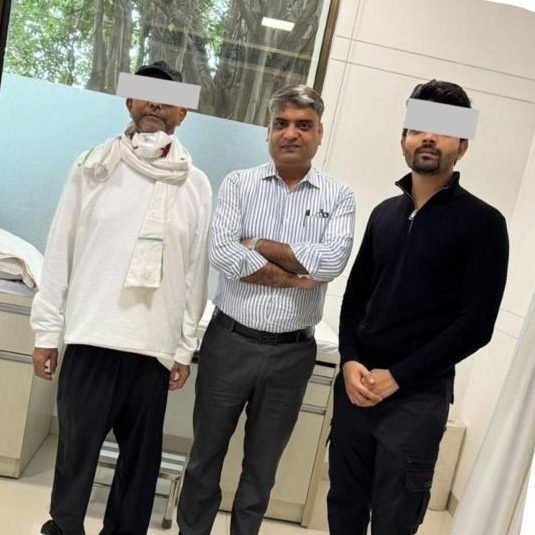
Who needs a liver transplant
- Cirrhosis with fluid in the abdomen (ascites), vomiting of blood, confusion (encephalopathy) or repeated hospital admissions
- MELD score of 15 or more, or Child-Pugh class B/C
- Liver cancer (HCC) within transplant criteria in a cirrhotic liver
- Acute liver failure after viral hepatitis, drugs or poisoning
- Children with biliary atresia, metabolic liver disease or acute liver failure
- Fatty liver (NASH) that has progressed to cirrhosis — now the fastest-growing reason for transplant in India
Get a transplant opinion early
The commonest regret in transplant clinics is the year lost between the first complication and the first transplant consultation. A transplant opinion does not commit you to a transplant — it tells you where you stand.
- Bring LFT, PT/INR, creatinine, sodium (for MELD), viral markers
- Ultrasound / CT / MRI of the liver, endoscopy report if done
- List of medicines and previous admissions
- Blood group of the patient and possible family donors
Types of liver transplant Dr Gupta performs
Living donor liver transplant (LDLT)
A healthy relative donates the right lobe (adult) or left lateral segment (child). The commonest transplant in India: planned, no waiting list, and the donor's liver regrows fully in 6–8 weeks.
Learn moreDeceased donor liver transplant (DDLT)
A whole liver from a brain-dead donor allotted through NOTTO and the Uttar Pradesh state registry. Dr Gupta's team lists eligible patients and is on call for organ offers 24×7.
Learn moreSwap and ABO-incompatible transplant
When the family donor's blood group does not match, a swap with another family or desensitisation for an ABO-incompatible transplant can still make transplant possible.
Learn moreTransplant for liver cancer
Hepatocellular carcinoma within Milan/UCSF criteria is best treated by transplant — removing both the cancer and the cirrhotic liver that produced it.
Learn moreThe transplant journey, step by step
From the first consultation to lifelong follow-up. For a fit living donor, first visit to surgery is typically 3–4 weeks.
Consultation & reports
Reports and scans reviewed by Dr Gupta; MELD calculated; a clear answer on whether transplant is needed now, later or not at all.
Day 1Recipient evaluation
Blood and viral tests, CT/MRI, echocardiography, lung tests, dental and infection screening, nutrition and psychological assessment.
Week 1–2Donor evaluation
Blood group, liver tests, CT volumetry, MRCP, fitness assessment — done in parallel with the recipient's work-up.
Week 1–2Authorisation committee
Legal clearance under the Transplantation of Human Organs Act, with relationship and consent verified.
Week 2–3Transplant surgery
Donor and recipient operated in parallel theatres by Dr Gupta's team; 8–12 hours.
Day 0Liver ICU
Dedicated transplant ICU with Doppler monitoring, immunosuppression started, early walking and feeding.
Days 1–7Ward and home
Donor home in about a week; recipient in 2–3 weeks with medicines, diet plan and follow-up schedule.
Weeks 2–3Follow-up for life
Weekly, then monthly, then quarterly at the hospital or the Indirapuram clinic; video follow-up for outstation and international patients.
Ongoing
Why families choose Dr Manoj Gupta for liver transplant
- Fellowship training in liver transplant at Indraprastha Apollo Hospital and Sir Ganga Ram Hospital — two of the highest-volume programmes in the world
- Has helped establish liver transplant programmes at several centres in India and abroad
- Minimally invasive (laparoscopic/robotic) donor hepatectomy for suitable donors — smaller scar, faster donor recovery
- Dedicated liver ICU, transplant anaesthesia, hepatology, interventional radiology and blood bank under one roof at Yatharth
- ICMR-recognised, with international transplant honours in the UK and Singapore
- Dr Gupta personally counsels every donor and family, and is available through the transplant coordinator at any hour
Liver transplant cost and insurance
Yatharth Hospital gives a written package estimate after evaluation. Here is what goes into it.
What the package includes
Recipient and donor surgery, ICU and ward stay for the standard duration, surgeon and anaesthesia fees, operation theatre, standard medicines and consumables during the stay, and routine investigations.
What varies
Room category, the patient's condition on admission (a sicker patient needs a longer ICU stay), complications, blood products beyond the standard, and any additional procedures.
Insurance and schemes
Liver transplant is covered by many health insurance policies, corporate schemes and CGHS/ECHS with prior approval. Yatharth's insurance desk obtains pre-authorisation; the team also guides families on crowdfunding and charitable support where needed.
Medicines after transplant
Immunosuppressant tablets are a monthly cost that reduces after the first year as doses are lowered. Generic options are available in India and are discussed at discharge.
Liver transplant patients and their donors
 Liver Transplant
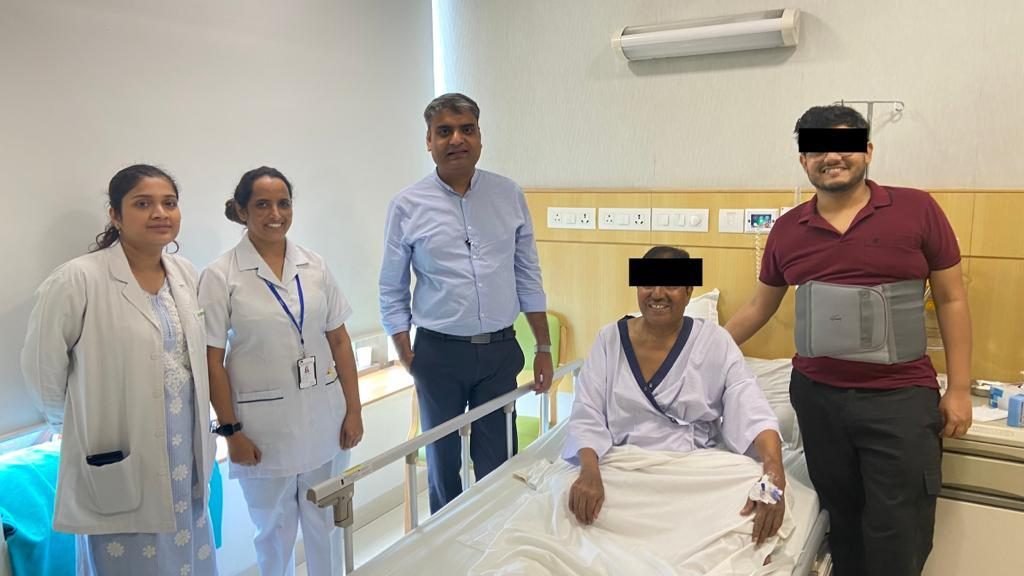
Two operations, one family — and the donor is already standing
Days after a living donor liver transplant, the donor stands beside the recipient's bed in his abdominal binder, smiling. Both are on the same ward, both are recovering, and the liver they now share is already regrowing.
Read the story →Liver TransplantOne month after liver transplant: patient and donor, side by side, both on their feet
Thirty days earlier one of them had a failing liver and the other a healthy one. This follow-up photograph shows what a living donor liver transplant looks like a month on — both recovered, both walking in for review together.
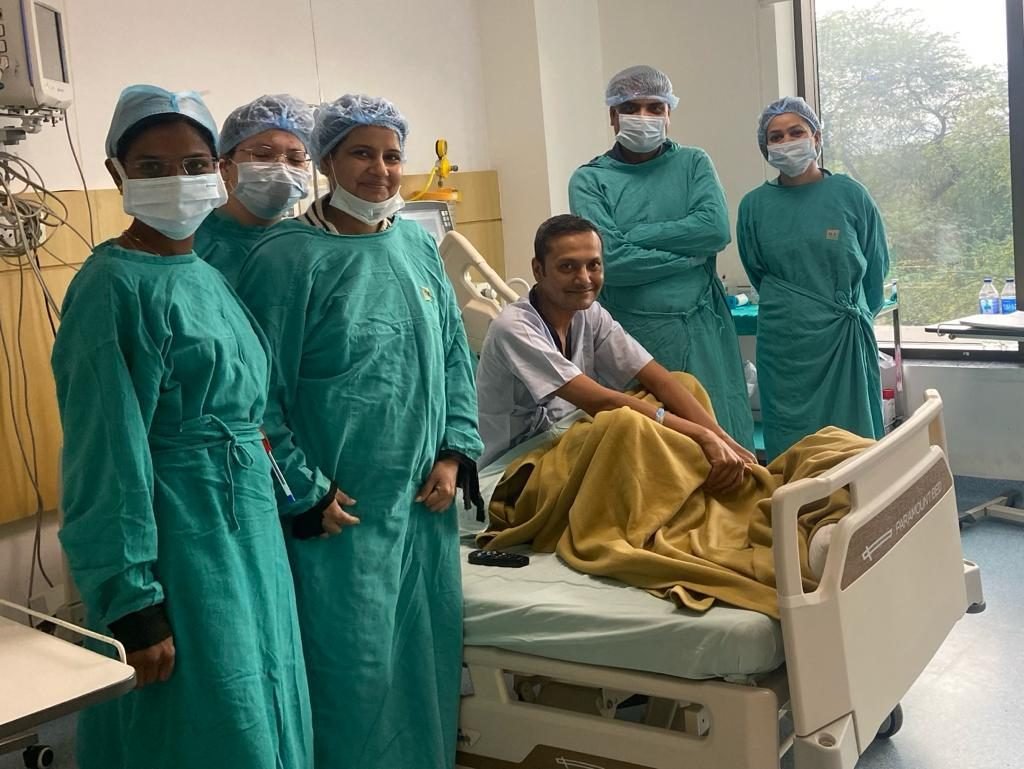
Read the story →Liver TransplantInside the transplant ICU: sitting up, smiling, and surrounded by the team
Green gowns, caps and masks are the uniform of the liver transplant ICU — a protected unit where the new liver is guarded through its first days. What matters in these photographs is the patient in the middle of it: sitting up, alert and smiling.
Read the story →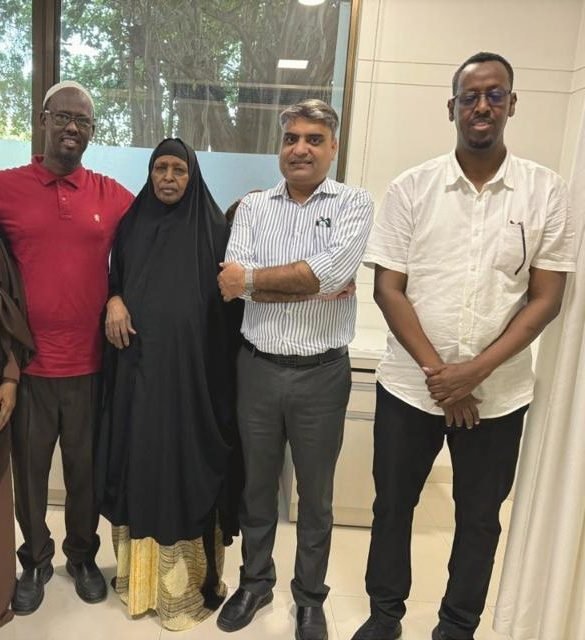
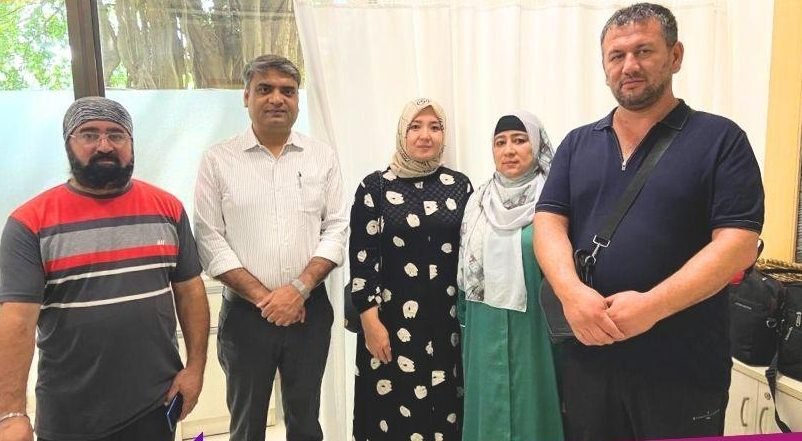
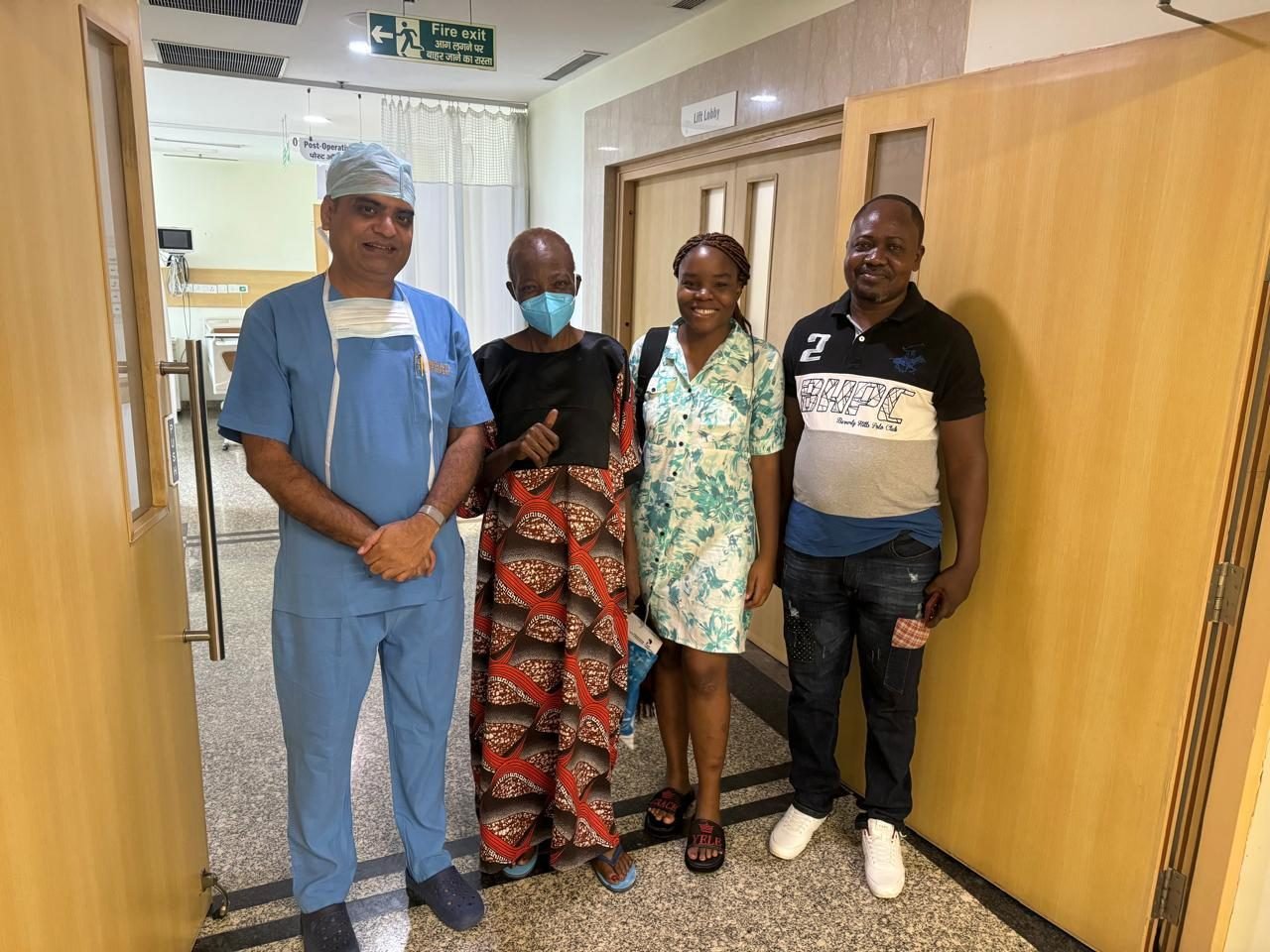
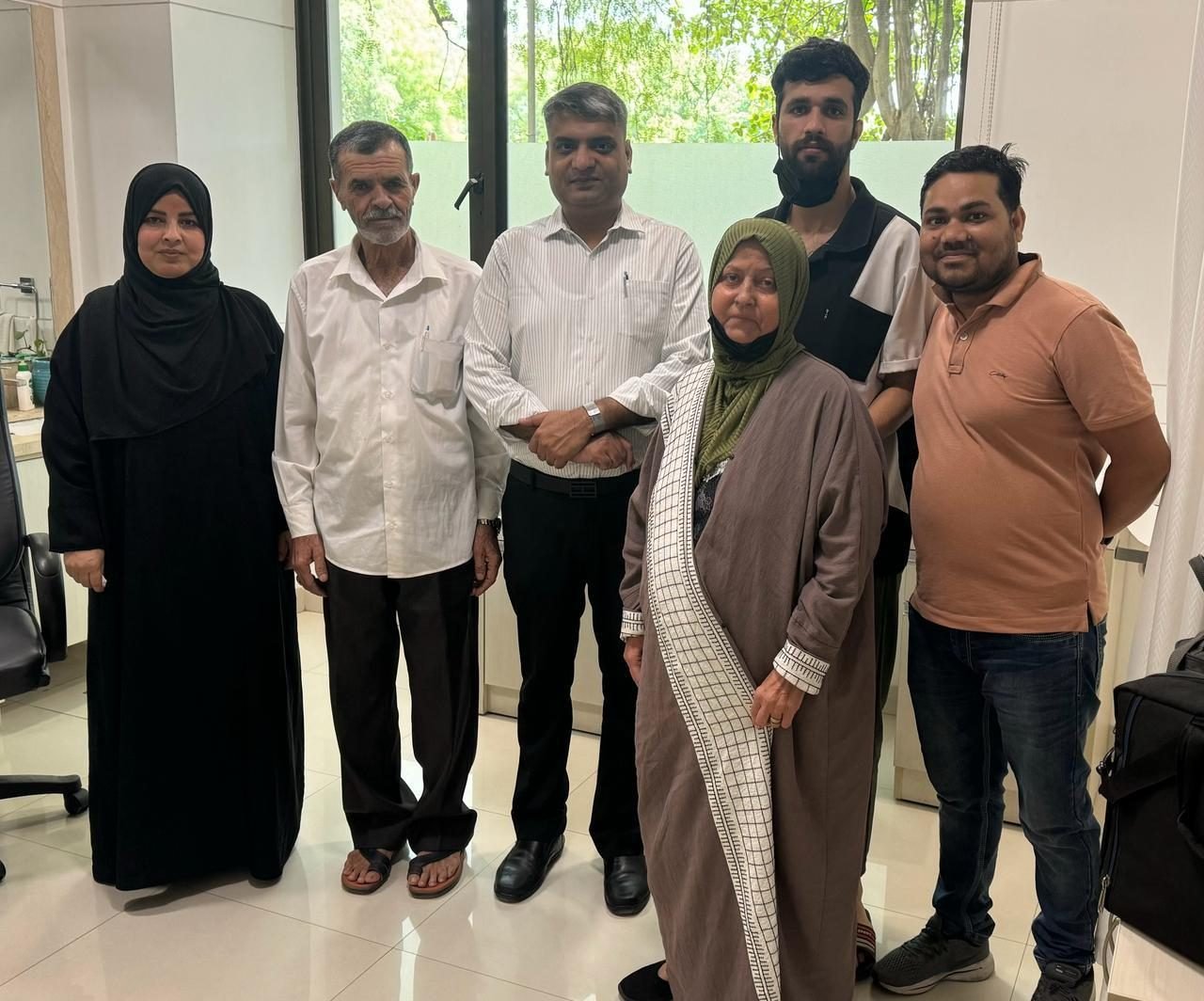
Liver transplant in India for patients from abroad
A living donor who is a near relative, relationship documents endorsed by your embassy, and a total stay of 6–8 weeks. Dr Gupta's team and Yatharth's international desk handle the opinion, estimate, visa letter and everything on arrival.
Liver transplant — questions families ask
How many liver transplants has Dr Manoj Gupta done?
Dr Gupta has been part of more than 500 liver transplants over 20 years, including living donor, deceased donor, paediatric and re-transplants, at Apollo, Sir Ganga Ram, Jaypee, PSRI and now Yatharth Super Speciality Hospital.
What is the success rate of liver transplant in India?
At experienced centres, one-year survival after elective living donor liver transplant is around 90%, and long-term survival is 70–80% at five years. Outcomes depend on how sick the patient is at the time of transplant — earlier referral gives better results.
Who can donate a liver?
A healthy near relative aged 18–55 with a compatible blood group, a BMI under about 30, no diabetes or major illness, and a liver of suitable size and anatomy on CT and MRI.
How long does the whole process take?
From first consultation to surgery, typically 3–4 weeks for a living donor transplant when the donor is fit. Emergencies (acute liver failure) are fast-tracked within days.
How much does a liver transplant cost in Noida?
Cost depends on the patient's condition, room category and stay. Yatharth Hospital provides a written package estimate after evaluation; many insurance and corporate schemes cover transplant. Call 98180 40155 for an estimate.
Can a patient with liver cancer have a transplant?
Yes, when the tumour is within accepted size and number criteria (Milan or UCSF) and has not spread outside the liver. Transplant removes both the cancer and the diseased liver.
Can international patients have a liver transplant in India?
Yes, with a living donor who is a near relative. The relationship must be documented and endorsed by the patient's embassy. See the international patients page for the process.
What is life like after a liver transplant?
Most recipients return to work in about three months and to a normal diet, travel and exercise within six months. Lifelong anti-rejection tablets and regular follow-up are the only permanent changes.
Read more about liver transplant
Liver transplant in India: who needs one, how it works and what decides the cost
A liver transplant surgeon's plain-language guide — the signs that a liver is failing, living versus deceased donor transplant, what the evaluation involves, the operation, recovery, results, and what actually determines the cost.
Becoming a living liver donor: what families need to know before they decide
Who can donate, the tests, how much liver is removed, the risks stated honestly, the scar, the recovery timeline, and the legal protection every donor has in India — from a surgeon who has been part of 500+ transplants.
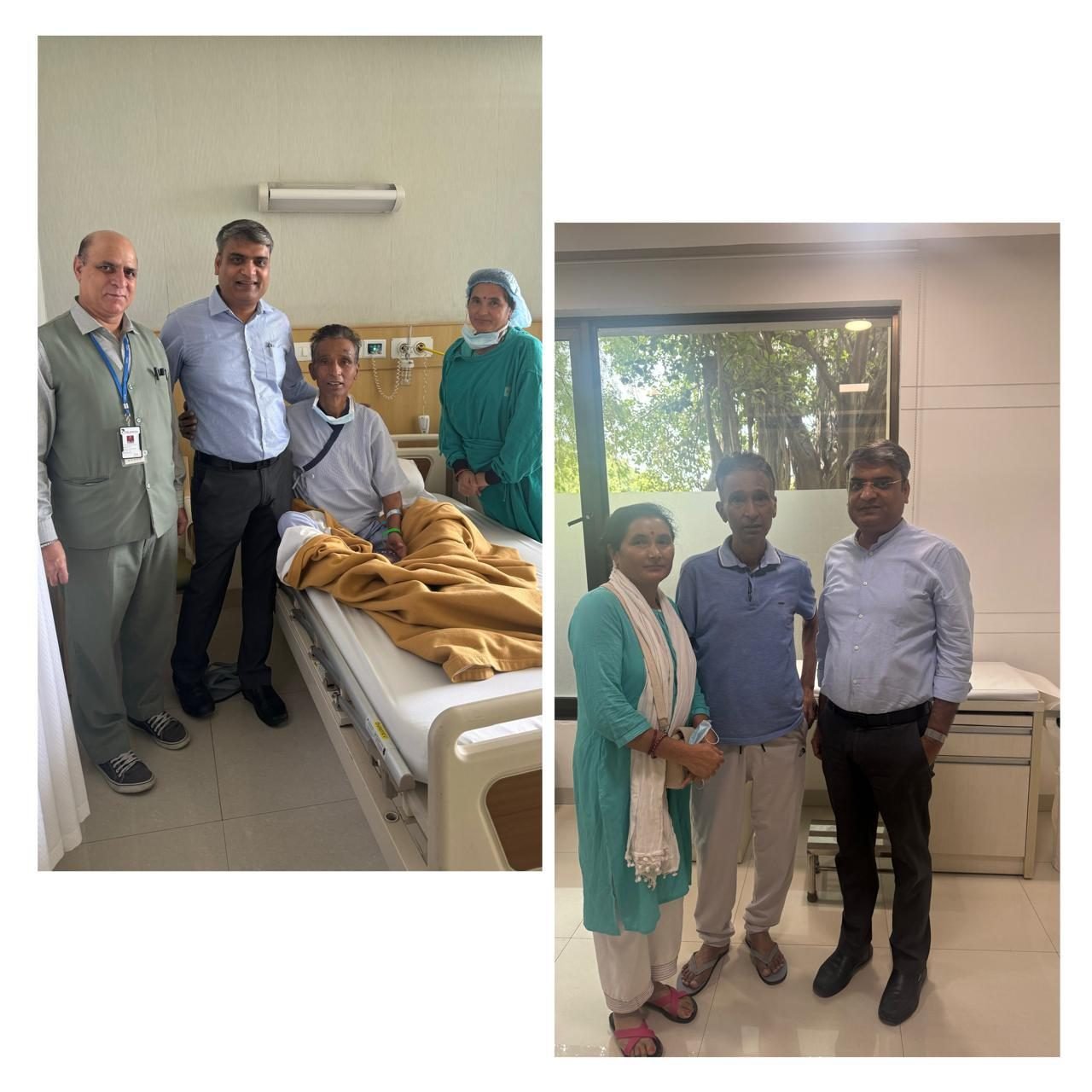
Life after liver transplant: the first year, month by month
What actually happens after you leave hospital with a new liver — medicines, tests, food, work, travel, vaccinations and the warning signs that need a call the same day — laid out month by month.

Fatty liver to cirrhosis: the silent journey and where a surgeon comes in
Fatty liver is now the leading reason for liver transplant referrals in urban India. A liver transplant surgeon explains the stages and when to worry.
What patients say on Google
Is transplant the right step? Find out this week.
Send the reports on WhatsApp. Dr Gupta reviews them himself and tells you whether transplant is needed now, later, or not at all.