Colectomy for Colovesical Fistula in Noida
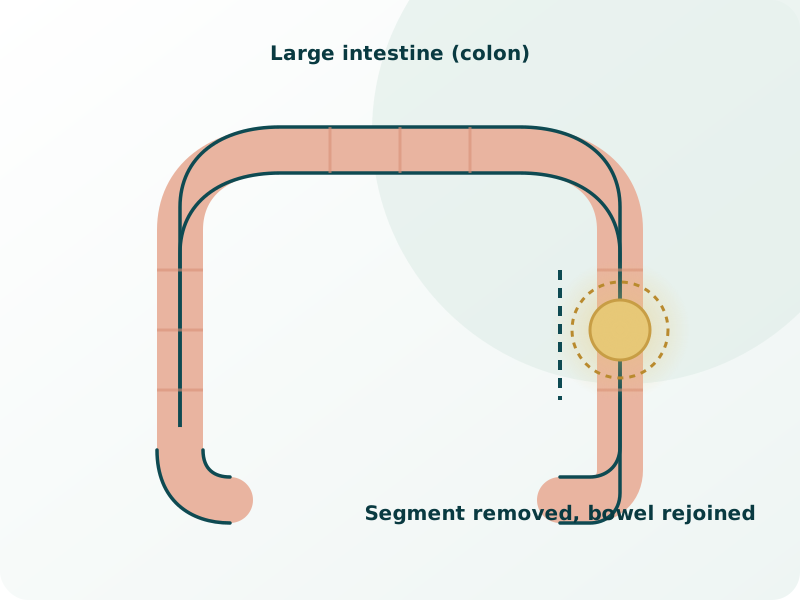
A colovesical fistula is an abnormal tunnel between the colon (usually the sigmoid) and the urinary bladder. Patients pass air or stool in the urine and suffer repeated urinary infections. The cure is to remove the diseased segment of colon, close the bladder opening and rejoin the bowel — an operation Dr Manoj Gupta performs laparoscopically in most cases.

Causes and diagnosis
Complicated diverticulitis is the commonest cause, followed by Crohn's disease, previous radiotherapy and, importantly, colon or bladder cancer — which must be excluded. CT scan with contrast, colonoscopy and cystoscopy define the fistula and its cause.
The operation
The sigmoid colon with the fistula is mobilised and resected; the bladder opening is closed in layers and a catheter left for 7–10 days; the colon is rejoined. In the presence of severe inflammation a temporary stoma may be needed. When cancer is the cause, an oncological resection with lymph nodes is performed.

Recovery
Hospital stay of 5–7 days, catheter removal after a cystogram confirms the bladder has healed, and a return to normal routine within 3–4 weeks. Urinary infections stop once the fistula is gone.
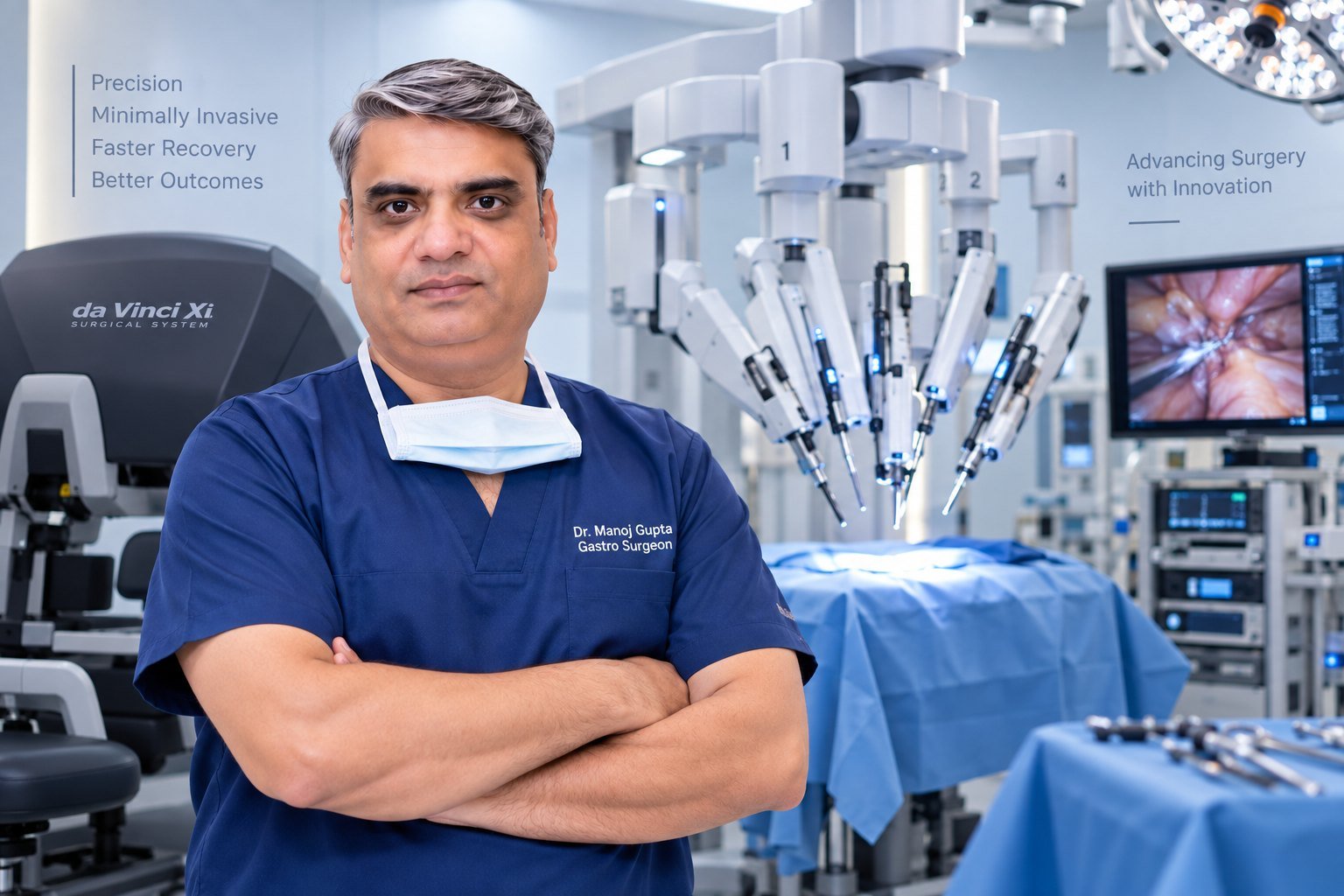
Why choose Dr Manoj Gupta for colectomy for colovesical fistula
- Senior Director & Head of Robotic and Laparoscopic GI Surgery at Yatharth Super Speciality Hospital — full robotic suite, liver ICU and 24×7 emergency team.
- Trained where the difficult cases go: DNB in GI Surgery at Sir Ganga Ram Hospital, liver transplant fellowships at Apollo and Ganga Ram.
- 500+ liver transplants — the bleeding control and bile-duct skills that make every abdominal operation safer.
- Straight answers. Dr Gupta reviews your scans himself and only recommends surgery when it will help.
Questions about colectomy for colovesical fistula
Is a colovesical fistula an emergency?
Not usually, but it will not heal on its own and repeated urinary infections can damage the kidneys. Planned surgery after controlling infection is the standard approach.
Why does a GI surgeon do this rather than a urologist?
The disease is in the colon; the bladder is the innocent bystander. The bowel resection is the main part of the operation, with a urologist joining when a large bladder repair is needed.
Other procedures
Not sure if you need surgery? Ask first.
Bring your reports for a clear, honest opinion. Same-day and evening appointments available.