Living donor liver transplant · Yatharth Hospital
The situation
Chronic liver disease had reached the point where medicines, diet and repeated admissions were no longer keeping the patient safe. Only one treatment changes that trajectory — a new liver — and in India the fastest route to one is a healthy family member willing to give a part of theirs.
The decision
The family's young donor went through the complete work-up: blood group matching, CT volumetry to measure exactly how much liver could be taken safely, MRI of the bile ducts, cardiac and psychological assessment, and clearance from the hospital's authorisation committee under the Transplantation of Human Organs Act. Dr Gupta met the donor alone, without the family present, to be certain the decision was his own.
Two operating theatres, one morning
Donor and recipient were operated in parallel theatres. In one, Dr Gupta's team removed the right lobe of the donor's liver — roughly 60% of the organ — leaving the remainder to regenerate. In the other, the diseased liver was removed and the new graft implanted, with its artery, portal vein, hepatic vein and bile duct reconstructed under magnification. Eight to twelve hours later, a new liver was already making bile.
The photograph
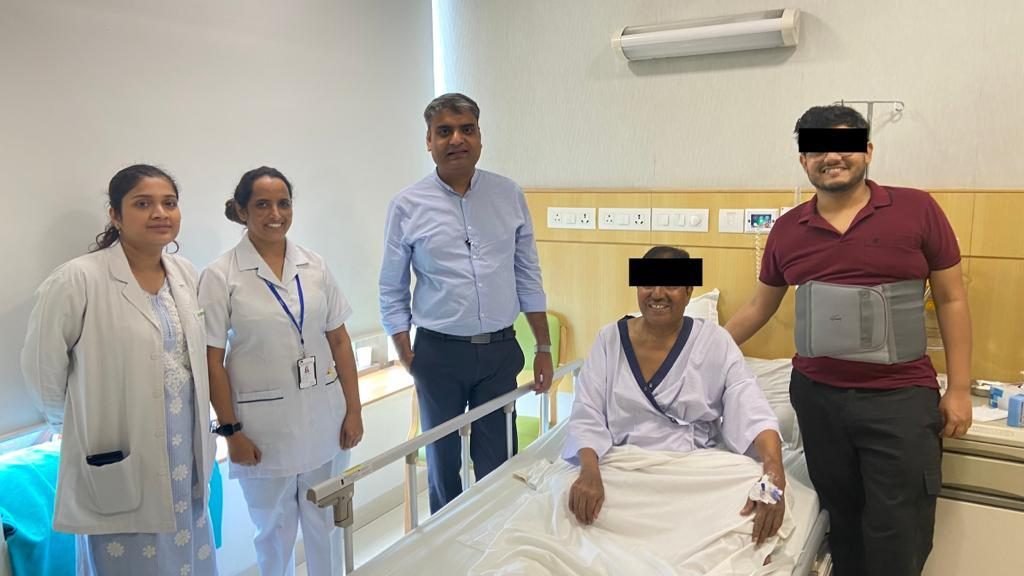
This is the ward a few days on. The donor is standing in an abdominal binder — he has been walking the corridor since the first day. The recipient is sitting up, off oxygen and starting to eat, watched by the transplant nurses and doctors who round several times a day. The donor goes home first, usually within a week; the recipient about two weeks after that.
Today
Both live with a liver that has regrown to near-normal size. The donor takes no medicines at all; the recipient takes anti-rejection tablets and is reviewed at the hospital or the Indirapuram clinic.
“The bravest person in a living donor transplant is the donor. Our first duty is to send them home with a liver that regrows and a scar that fades — every step is planned around that.”
What this means for you
- A healthy relative aged 18–55 with a compatible blood group can usually donate
- Donor surgery can be laparoscopic or robotic in suitable cases
- Donor work-up takes 1–2 weeks; the transplant is scheduled once committee approval is in hand
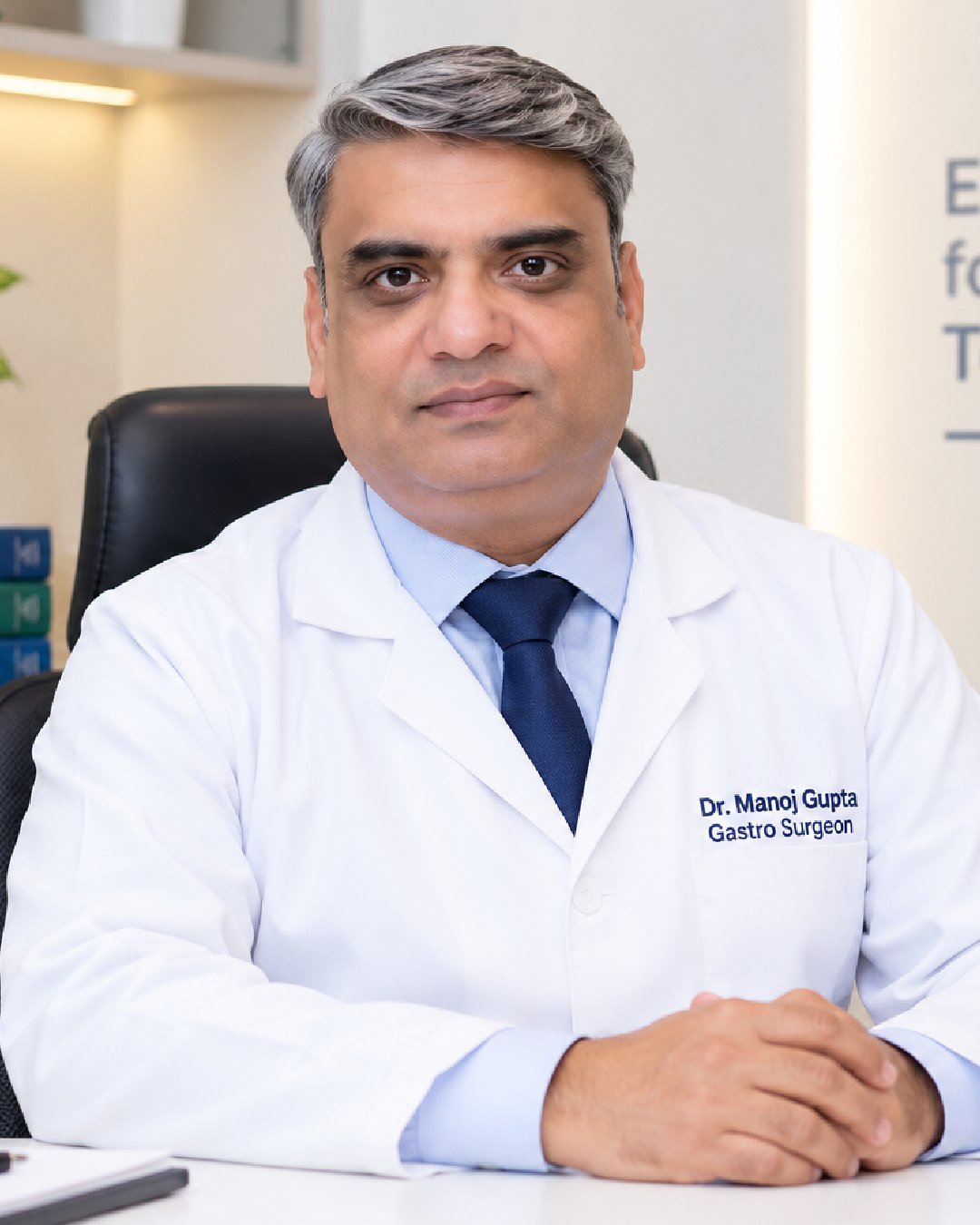
Dr Manoj Gupta
MBBS, MS, DNB (GI Surgery). Senior Director & Head, Robotic & Laparoscopic GI Surgery, GI Oncology and Liver Transplant, Yatharth Super Speciality Hospital. 20+ years, 500+ liver transplants.
Patient photographs are shared with consent. Identifying details are withheld for privacy; recovery timelines describe the typical course for this type of surgery.