In this article
- Silent stones vs symptomatic stones
- Why tablets don't work
- What surgery involves today
- The North India caveat
- Red flags that mean 'don't wait'
Silent stones vs symptomatic stones
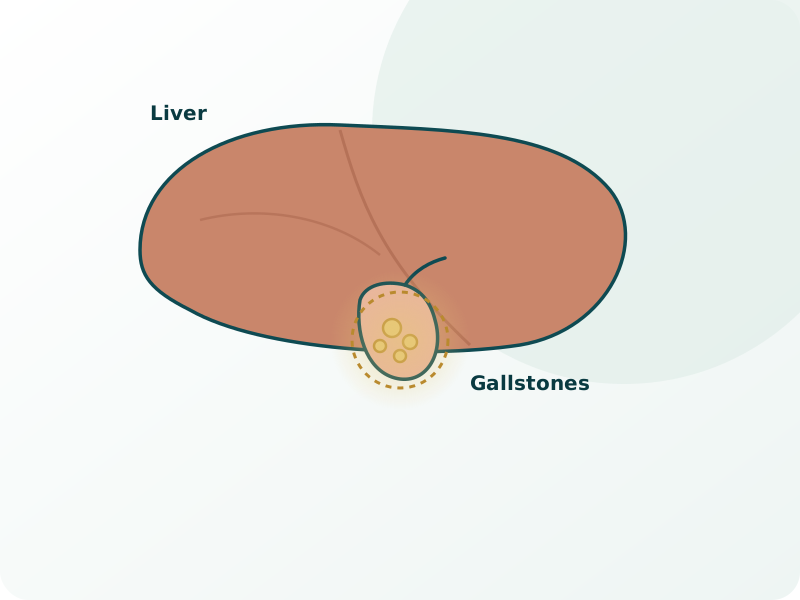
Roughly one in ten adults has gallstones, and most never know it. Stones found by chance on an ultrasound done for another reason, with no pain, can usually be left alone and reviewed yearly. Stones that have caused even one episode of biliary colic — severe right-upper-abdominal pain lasting more than 30 minutes — are a different matter: once they have hurt you, they will again, and each attack risks infection, pancreatitis or a stone slipping into the bile duct.
Why tablets don't work
Ursodeoxycholic acid can shrink small cholesterol stones over 6–24 months in a minority of patients, but the stones return in most people within a few years of stopping, and it does nothing for calcified or pigment stones, which are common in India. Surgery removes the gallbladder itself, so the problem cannot recur.
What surgery involves today
A laparoscopic cholecystectomy is done through three or four small openings, takes under an hour, and most patients are home the next morning. For inflamed or previously infected gallbladders, robotic surgery adds precision. Recovery to office work is typically a week.
The North India caveat
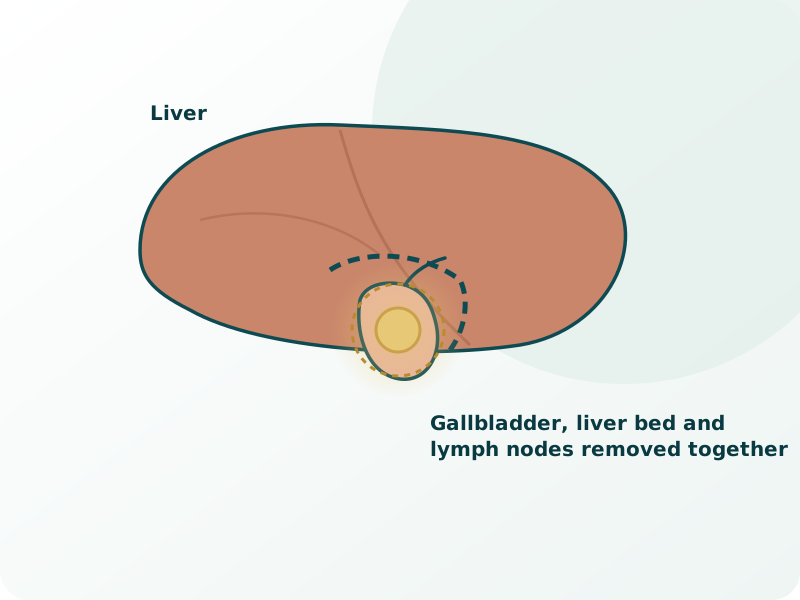
In the Gangetic belt, gallbladder cancer is common enough that any ultrasound showing a thickened or irregular gallbladder wall, or a polyp of 10 mm or more, should be reviewed by a hepatobiliary surgeon before a routine operation is booked.
Red flags that mean 'don't wait'
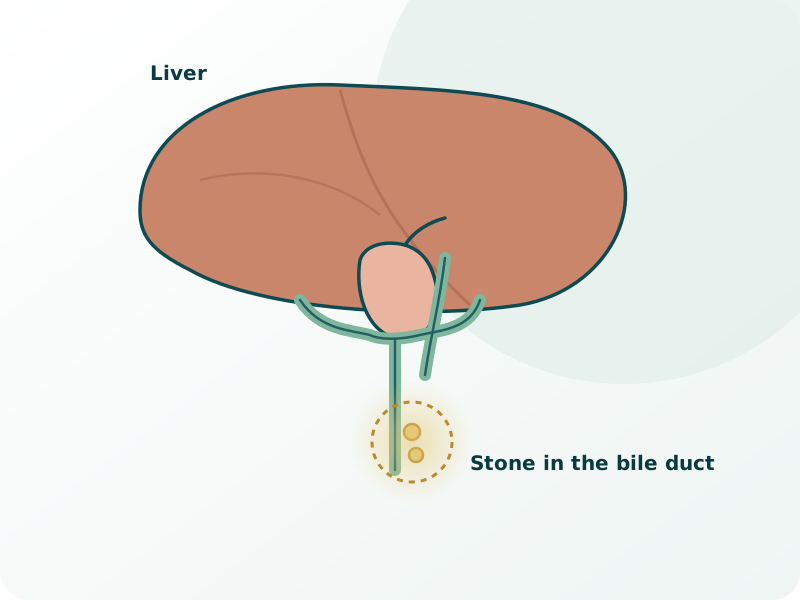
Fever with pain, yellow eyes, dark urine, or pain that spreads to the back could mean cholecystitis, a bile duct stone or pancreatitis. These need urgent assessment — call the hospital directly.

Dr Manoj Gupta
MBBS, MS, DNB (GI Surgery). Senior Director & Head, Robotic & Laparoscopic GI Surgery, GI Oncology and Liver Transplant, Yatharth Super Speciality Hospital. 20+ years, 500+ liver transplants.
This article is general medical education and does not replace a consultation. Figures quoted are from the sources listed and from typical outcomes at experienced centres; your own numbers depend on your condition.