In this article
- The symptom that should never be ignored
- Two cancers, two stories
- Chemoradiation first
- What esophagectomy involves
- Why keyhole changes everything
- The hospital stay
- Eating afterwards
- What to ask your surgeon
The symptom that should never be ignored
Food sticking in the chest — bread and roti first, then rice, then liquids — that worsens over weeks is oesophageal cancer until proven otherwise. Weight loss, pain on swallowing and regurgitation follow. An endoscopy with biopsy takes twenty minutes and settles it. Waiting for the symptom to pass is the commonest reason these cancers are found late.
Two cancers, two stories
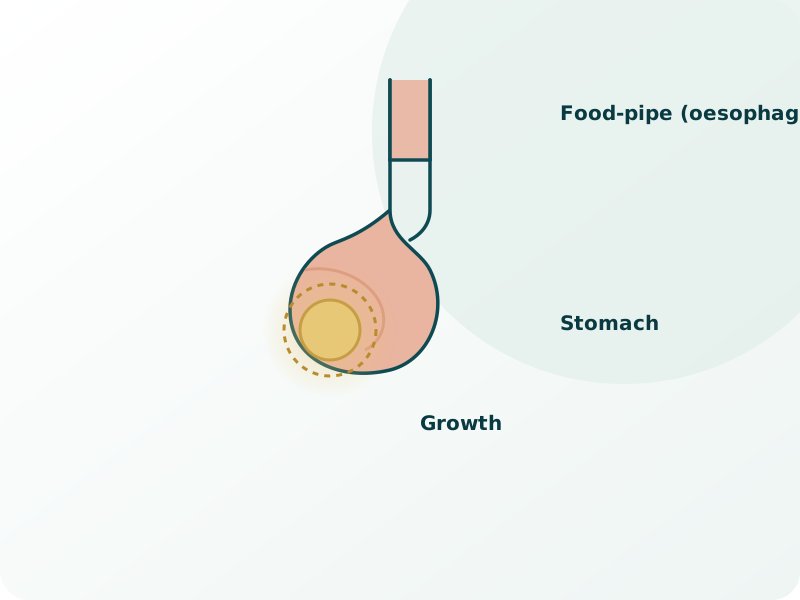
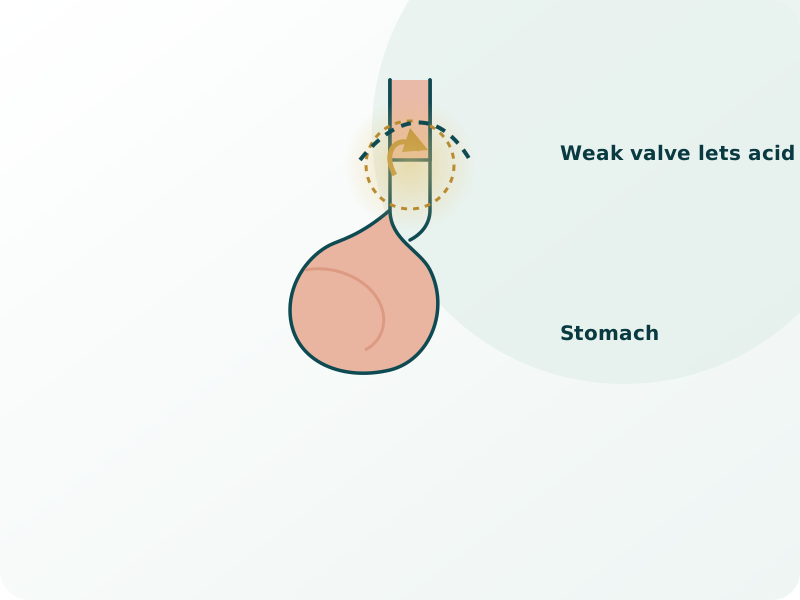
Squamous cell carcinoma, the commoner type in India, is linked to tobacco (smoked and chewed), alcohol, very hot beverages and poor nutrition, and tends to occur in the middle and upper food-pipe. Adenocarcinoma arises at the lower end from long-standing acid reflux and Barrett's oesophagus, and is rising with obesity. Both are staged with PET-CT and endoscopic ultrasound.
Chemoradiation first
For locally advanced tumours, five weeks of chemoradiotherapy before surgery roughly doubled overall survival compared with surgery alone in the landmark CROSS trial, and in a substantial minority of patients no cancer is found in the removed specimen at all. Some squamous cancers — especially in the upper oesophagus, or in patients unfit for surgery — are treated with chemoradiation alone.
What esophagectomy involves
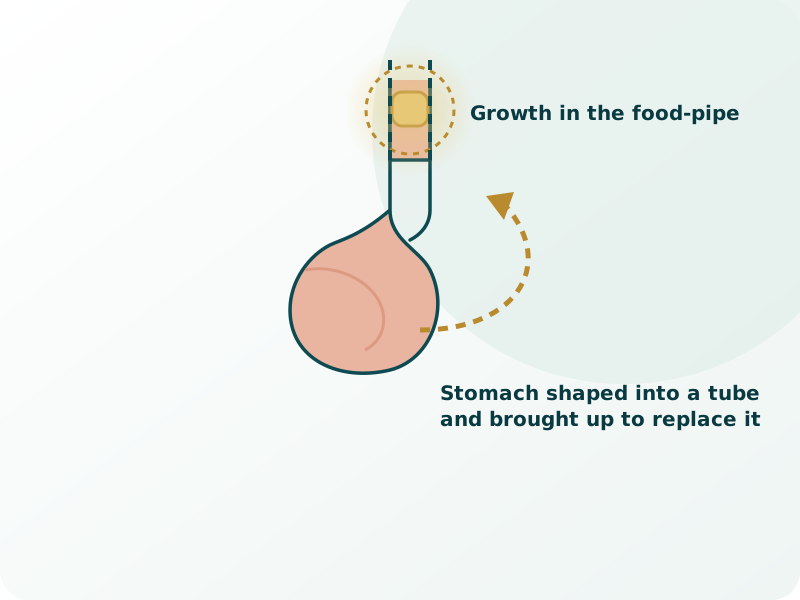
The oesophagus with its lymph nodes is removed through the chest; the stomach is freed in the abdomen, shaped into a tube and brought up to replace it, joined in the chest (Ivor Lewis) or in the neck (McKeown). Traditionally this meant a large chest incision with rib spreading plus an abdominal incision — one of the most painful and lung-threatening combinations in surgery.
Why keyhole changes everything
In the TIME trial, replacing the open operation with a thoraco-laparoscopic (minimally invasive) esophagectomy cut pulmonary infections in the first two weeks from 29% to 9%, with less pain and a shorter stay, and no compromise on the cancer clearance. Lung complications are the main cause of death after this operation, so this is not a cosmetic advantage. The ROBOT trial later showed that robot-assisted esophagectomy reduced overall complications and pain compared with open surgery, with better short-term quality of life.
The hospital stay
ICU for one or two days; walking and chest physiotherapy from day one; a feeding tube into the intestine for nutrition while the join heals; a swallow study around day five to seven; then liquids, then soft food. Home in eight to twelve days. A temporary hoarse voice can occur, particularly with a neck join, and usually recovers.
Eating afterwards
Small, frequent meals for the first months; sitting upright after eating; avoiding large volumes of liquid with food. Most patients return to a near-normal diet within three to six months, with some weight loss that stabilises.
What to ask your surgeon
Is my tumour resectable? Should I have chemoradiation first? Will the operation be minimally invasive or open, and why? How many esophagectomies does the team do each year? A clear answer to each is the mark of a centre that does this routinely.
Sources
- van Hagen P, et al. Preoperative chemoradiotherapy for esophageal or junctional cancer (CROSS). N Engl J Med 2012;366:2074–2084.
- Biere SS, et al. Minimally invasive versus open oesophagectomy for patients with oesophageal cancer: a multicentre, open-label, randomised controlled trial (TIME). Lancet 2012;379:1887–1892.
- van der Sluis PC, et al. Robot-assisted minimally invasive thoracolaparoscopic esophagectomy versus open transthoracic esophagectomy for resectable esophageal cancer: a randomized controlled trial (ROBOT). Ann Surg 2019;269:621–630.
Dr Manoj Gupta
MBBS, MS, DNB (GI Surgery). Senior Director & Head, Robotic & Laparoscopic GI Surgery, GI Oncology and Liver Transplant, Yatharth Super Speciality Hospital. 20+ years, 500+ liver transplants.
This article is general medical education and does not replace a consultation. Figures quoted are from the sources listed and from typical outcomes at experienced centres; your own numbers depend on your condition.